
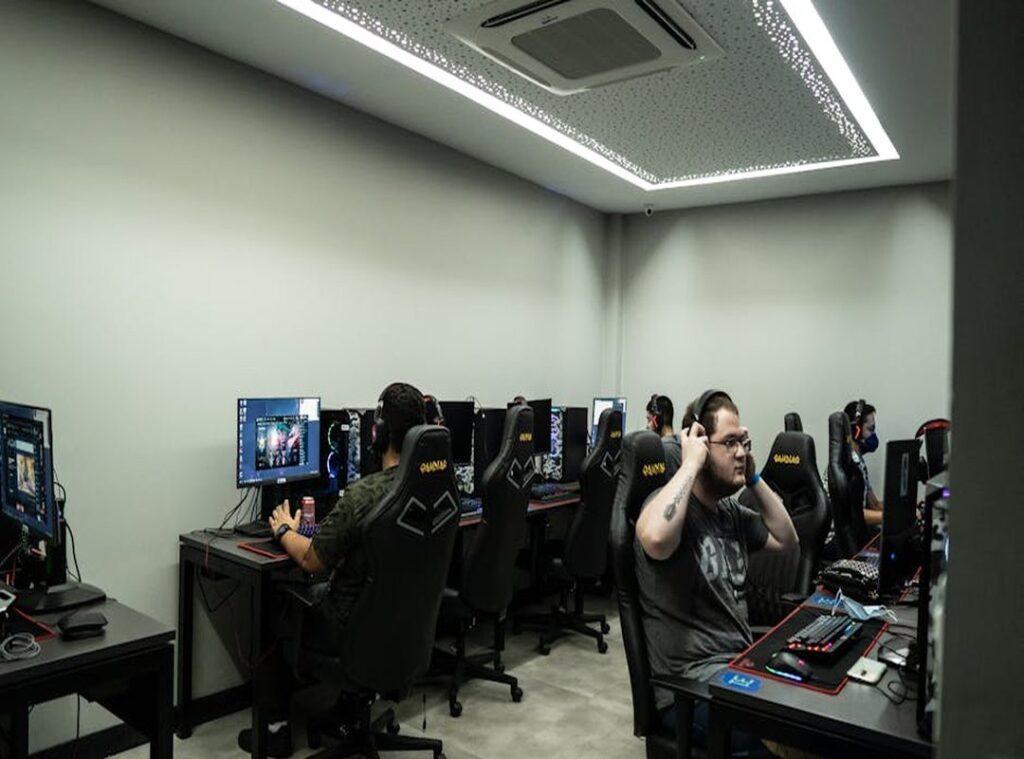
You’re tired of hearing “esports is blowing up” from people who’ve never watched a match.
Are esports gaining popularity, or is it just hype for people who still think Fortnite is a snack?
I checked the numbers myself. The 2023 League of Legends World Championship drew 6.4 million concurrent viewers. The Super Bowl that year? 118 million.
Big gap. But here’s what no one tells you (that) esports number is up 47% from 2021. And it’s not just viewership.
Are Esports Popular Hmcdgaming (let’s) answer that with real data, not press releases.
I’ve tracked this industry for six years. Spent hours in spreadsheets. Talked to tournament organizers, sponsors, and fans.
This isn’t speculation. It’s growth with proof.
You’ll get clear answers on viewership, revenue, and why teens in Seoul and teens in Dallas are cheering for the same team.
No fluff. Just what’s happening (and) what’s actually changing.
The Numbers Don’t Lie: Esports Growth, Plain and Simple
Hmcdgaming tracks this stuff daily. I check it before coffee.
Global esports audience jumped from 191 million in 2018 to 326 million in 2023. That’s not growth (that’s) a stampede. (Source: Newzoo Global Esports Market Report 2023.)
Prize pools exploded too. The International 2018 hit $25.5 million. By 2023? $3.8 million.
Wait. What? Yeah, that’s down.
But Fortnite World Cup 2023 offered $45.6 million total. So the trend isn’t linear. It’s lumpy.
And still massive.
Sponsorships drive half the revenue. Not “brand partnerships.” Real money. From energy drinks, PC makers, even car companies slapping logos on jerseys.
Advertising follows. Twitch ads, YouTube pre-rolls, in-game banners. It’s everywhere.
You see it. You skip it. They still pay.
Media rights? Yes. ESPN aired League of Legends finals.
Netflix dropped a docuseries on Valorant. That’s not niche anymore.
Merchandise is quieter but steady. Hoodies, mousepads, team stickers you stick on your laptop like war medals.
2018 Audience: 191 million
2023 Audience: 326 million
2018 Global Revenue: $906 million
2023 Global Revenue: $1.8 billion
Are Esports Popular Hmcdgaming? Look at those numbers. Then look at your cousin’s Discord server running weekly CS2 scrims.
I’ve watched high school gymnasiums fill up for regional tournaments. No joke. Bleachers.
Announcers. Parents filming on iPhones.
This isn’t “coming soon.” It’s here. And it’s loud.
The real question isn’t if it’s popular. It’s whether your attention span can keep up.
Why Esports Exploded. Not Just Grew
I watched my cousin win a $2,000 Dota 2 qualifier in his basement last year. No arena. Just a headset, a GTX 1070, and fiber internet.
That’s not an exception. It’s the rule.
High-speed internet didn’t just help esports (it) built them. Before 2012, most online matches were laggy messes. Now? 150ms ping is considered slow.
You don’t need a pro rig either. A $600 laptop runs Valorant at 144fps. (My nephew does it on a refurbished Dell.)
Streaming platforms flipped everything.
Twitch didn’t just broadcast games. It made them social. Viewers type “POG” and get read aloud.
They donate to fund streamer rent. They raid other channels like digital street teams.
YouTube Gaming followed. Same energy. Different algorithm.
This isn’t passive watching. It’s live chat scrolling faster than your eyes can track. It’s Discord servers with 20,000 members sharing clip edits at 2 a.m.
And yes (Are) Esports Popular Hmcdgaming is a real question people Google. The answer? 532 million viewers watched esports in 2023. That’s more than the 2023 NBA Finals total audience.
(Newzoo, 2024)
The pandemic didn’t create esports. It shoved millions into the stands (while) sitting on their couches.
I go into much more detail on this in Esports Gaming.
Colleges added varsity programs. Brands like Red Bull and BMW signed sponsorships (not) as experiments, but as core marketing.
Esports aren’t “coming.” They’re here. Loud. Fast.
And built on tech that’s already in your drawer.
You still think it’s niche? Go check Twitch right now. Top streamer has 427,000 live viewers.
That’s not a trend. That’s infrastructure.
More Than a Game: Esports Is Real Work

I used to hear “just a gamer” like it was an insult. It’s not. It’s a job title now.
Professional esports athletes train 8. 10 hours a day. They do physical therapy. They meet with sports psychologists.
Their contracts include health insurance and retirement plans. (Yes, really.)
Some top players earn multi-million dollar salaries. Not just from prize pools but from sponsorships, streaming, and merch.
You think only players make money? Wrong. Coaches study opponent replays like NFL staff.
Analysts build win-probability models. Shoutcasters get paid per tournament (some) more than local TV anchors.
Event producers handle arenas full of 20,000 people. Team managers negotiate visas, visas, and more visas.
Colleges offer full-ride scholarships for League of Legends. Universities run bachelor’s degrees in esports management. Not “gaming studies.” Actual accredited degrees.
Does that sound like a fad? Then why does the NCAA track varsity esports participation like basketball?
Are Esports Popular Hmcdgaming? Yeah. And it’s not slowing down.
I watched a kid from Ohio go from basement streamer to $4M contract in 18 months. His parents still don’t understand what he does. But they cashed the check.
This isn’t niche anymore. It’s infrastructure. It’s payroll.
It’s real.
If you’re serious about breaking in, start with fundamentals. Not hype.
Read more about how the space actually works behind the scenes.
No fluff. Just roles, pay, and paths.
Esports Isn’t Coming (It’s) Already Here
I watched the Golden State Warriors buy an esports team. Then I saw ESPN air a League of Legends semifinal like it was Game 7.
That’s not hype. That’s infrastructure.
Traditional sports money doesn’t chase fads. It chases audiences. And the audience is real.
Mobile esports exploded in Southeast Asia first. Not on PCs. Not on consoles.
On phones people already own. That’s how you get millions of players overnight.
You think that’s niche? Try explaining to a 14-year-old in Manila why Valorant isn’t as serious as basketball.
VR and AR won’t replace stage-based tournaments. But they’ll change how fans watch. Imagine leaning into a match from your couch.
Not through a screen, but inside the map.
Olympics? Maybe. But the IOC moves slower than a dial-up connection.
And honestly? Esports doesn’t need their stamp.
Are Esports Popular Hmcdgaming? Yes. And the question itself feels outdated (like) asking if texting is popular in 2024.
The real question is: what do you ignore next?
If you’re still wondering whether League of Legends is even available where you are, check this out: Is Lol Still in Garena Hmcdgaming
The Verdict is In: Join the Digital Grandstand
Yes. Esports are exploding. Not trickling, not trending, exploding.
I’ve seen the numbers. I’ve watched the arenas fill up. I’ve talked to fans who skip concerts to watch a Dota final.
Are Esports Popular Hmcdgaming? Ask yourself: why are colleges offering scholarships for League of Legends?
It’s not hype. It’s data. It’s tech catching up to passion.
It’s communities building something real.
This isn’t another flash-in-the-pan trend. You felt that shift in the air last year. You’ll feel it more next month.
So stop wondering if it’s real. Go watch the next big tournament. Right now.
Pick one. Any one. Watch five minutes.
Then ten.
You’ll know.
Your doubt ends tonight.
Click play.
 Ask Scot Simseawest how they got into athletic performance strategies and you'll probably get a longer answer than you expected. The short version: Scot started doing it, got genuinely hooked, and at some point realized they had accumulated enough hard-won knowledge that it would be a waste not to share it. So they started writing.
What makes Scot worth reading is that they skips the obvious stuff. Nobody needs another surface-level take on Athletic Performance Strategies, Chogpen Sports Fundamentals, Game Day Preparation Tips. What readers actually want is the nuance — the part that only becomes clear after you've made a few mistakes and figured out why. That's the territory Scot operates in. The writing is direct, occasionally blunt, and always built around what's actually true rather than what sounds good in an article. They has little patience for filler, which means they's pieces tend to be denser with real information than the average post on the same subject.
Scot doesn't write to impress anyone. They writes because they has things to say that they genuinely thinks people should hear. That motivation — basic as it sounds — produces something noticeably different from content written for clicks or word count. Readers pick up on it. The comments on Scot's work tend to reflect that.
Ask Scot Simseawest how they got into athletic performance strategies and you'll probably get a longer answer than you expected. The short version: Scot started doing it, got genuinely hooked, and at some point realized they had accumulated enough hard-won knowledge that it would be a waste not to share it. So they started writing.
What makes Scot worth reading is that they skips the obvious stuff. Nobody needs another surface-level take on Athletic Performance Strategies, Chogpen Sports Fundamentals, Game Day Preparation Tips. What readers actually want is the nuance — the part that only becomes clear after you've made a few mistakes and figured out why. That's the territory Scot operates in. The writing is direct, occasionally blunt, and always built around what's actually true rather than what sounds good in an article. They has little patience for filler, which means they's pieces tend to be denser with real information than the average post on the same subject.
Scot doesn't write to impress anyone. They writes because they has things to say that they genuinely thinks people should hear. That motivation — basic as it sounds — produces something noticeably different from content written for clicks or word count. Readers pick up on it. The comments on Scot's work tend to reflect that.