
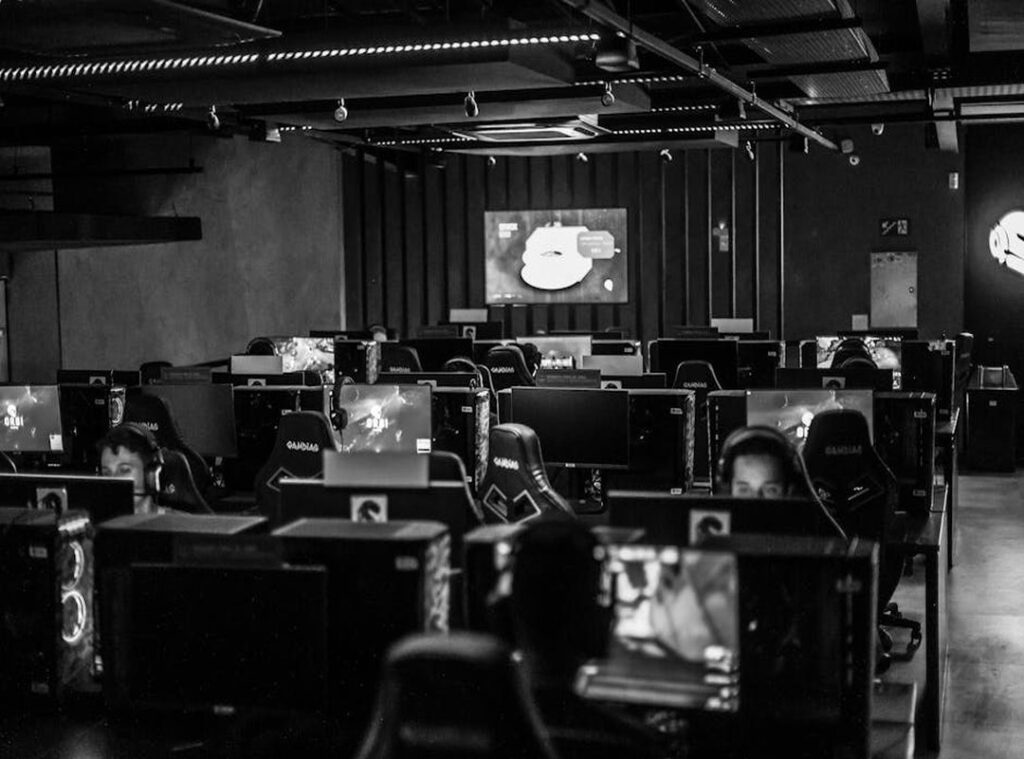
You think esports is just kids playing games in basements.
It’s not. The global esports audience hit 646 million people last year. That’s bigger than the NFL’s total fanbase.
And yet most people still shrug it off as a hobby. Or worse. They ignore it entirely.
I’ve been inside this world for over a decade. Not as a spectator. As a coach, event organizer, and parent of two competitive players.
So when someone says “esports doesn’t matter,” I know they haven’t seen the scholarships, the city-funded arenas, or the high schools adding pro gaming to their curriculum.
This isn’t hype. It’s happening.
How Esports Affect Society Hmcdgaming is about what’s real. Not what’s trending.
We’ll cover the money, the jobs, the classroom shifts, and the burnout. No sugarcoating.
You’ll walk away knowing exactly where esports sits in the real world. Not the stream. Not the meme.
The actual world.
Esports Isn’t Just Players and Prizes
I started coaching League of Legends teams in 2016. Not as a player. As a coach.
That job paid my rent for three years.
Esports built that paycheck. Not the prize pool. The space.
Coaches. Analysts. Shoutcasters who call matches like they’re calling the Super Bowl.
Team psychologists. Event managers who book arenas, coordinate visas, handle 3 a.m. tech checks. Broadcast producers stitching feeds from three countries at once.
Take shoutcasting. My friend Lena went from streaming her own Dota 2 games to casting at ESL One Birmingham. She didn’t need a degree.
She needed timing, voice control, and deep game knowledge. Now she travels full-time and books her own gigs.
That’s one non-player path. There are hundreds.
Hmcdgaming covers this side of the industry. Not just the highlights, but how real people get hired, trained, and paid.
Major tournaments pump money straight into local economies. I watched Dallas fill every hotel within five miles when the Overwatch League finals hit. Restaurants added extra shifts.
Uber drivers doubled their earnings. The convention center staff got overtime bonuses.
Streaming platforms? Built on esports traffic. Twitch’s biggest growth spikes still line up with Worlds and The International.
Hardware makers notice too. Razer, Logitech, ASUS (they) don’t make esports gear because it looks cool. They make it because pros demand specs, and fans copy them.
Apparel? Teams sell jerseys faster than some NFL franchises.
This isn’t speculative. It’s happening now. In cities with no pro sports team, esports events are the biggest economic event of the year.
How Esports Affect Society Hmcdgaming isn’t about hype. It’s about paychecks. Rent.
Local tax revenue. Real jobs.
I’ve seen interns become analysts in 18 months. I’ve seen bar owners thank tournament organizers at closing time.
That’s the engine. Loud. Fast.
Real.
Digital Nations Are Real. And They’re Built in Game Lobbies
I used to think “online friends” were just polite fiction. Then I played Overwatch with Lena from São Paulo and Raj from Bangalore for 18 months. We voice-chatted through exams, job losses, and family stuff.
No small talk. Just trust.
That’s not an exception. It’s the norm now.
Esports shatters the “lonely gamer” stereotype like a headshot through drywall. You don’t need to share a zip code to share plan, grief, or victory. You just need the same game, same Discord server, same stubborn will to win.
Inclusivity isn’t a sidebar. It’s built into the matchmaker.
Women’s leagues like the VALORANT Challengers APAC Women’s Division exist because players demanded them. Not because someone wrote a DEI report.
Non-binary streamers host weekly tournaments where pronouns are in every bio. Adaptive controllers let players with limited mobility compete at the highest levels (and) yes, they do.
Watching your favorite team live? That’s not passive. It’s screaming at your laptop while strangers in Tokyo and Toronto type the exact same “OMG” in the same second.
It’s Reddit threads that stay open for days after a finals match. It’s real-life meetups where you recognize someone by their Twitch avatar before their face.
This is how society shifts. Not in speeches. In pings, emotes, and post-game voice notes.
How Esports Affect Society Hmcdgaming isn’t about stats or headlines.
It’s about the kid in rural Ohio who joined her first all-female Rocket League league. And found her first real mentor.
You can read more about this in this article.
Pro tip: Turn on region-free matchmaking once. See who shows up. You’ll be surprised how fast “over there” becomes “right here.”
From Gaming Chairs to Classrooms: Esports Is Real Education

I watched a kid I coached go from skipping math class to leading a university esports team. He’s now interning at a logistics firm. No, he didn’t switch majors.
He used the same skills.
Colleges aren’t dabbling anymore. Esports scholarships are real. UCI. Robert Morris.
Boise State. They offer full rides. Not just for star players (for) analysts, coaches, broadcast teams.
You think it’s just clicking fast? Try calling a flank while your teammate’s down and the clock’s at 0:07. That’s rapid problem-solving under pressure.
You learn it faster in ranked matches than in most case studies.
Strategic planning? You scout opponents, adjust meta builds weekly, rotate resources across maps. All before lunch.
Sound familiar? Project managers do the same thing every day.
Team communication isn’t “good job” pings. It’s precise, calm, zero-ambiguity language under fire. Logistics coordinators need that exact tone when rerouting shipments mid-storm.
And yes. Some students start modding games and end up coding physics engines. Or reverse-engineering match data to spot patterns.
That’s not play. That’s STEM in action.
How Esports Affect Society Hmcdgaming? It’s reshaping what we call “rigorous training.”
If you’re serious about leveling up your game sense and decision speed, this guide walks through exactly how.
I’ve seen too many write off gaming as distraction. Meanwhile, the discipline is sharper than half the internships I’ve reviewed.
It’s not about replacing classrooms. It’s about recognizing where learning already lives. And meeting students there.
Esports Aren’t Perfect (And) That’s Okay
I’ve watched players collapse mid-tournament. Not from excitement. From exhaustion.
Burnout is real. Twelve-hour practice days, constant travel, zero off-season. It’s unsustainable.
Your body breaks. Your focus frays. And nobody talks about the panic attacks before stream goes live.
Toxicity? Yeah, it’s in the chat. It’s in the Discord.
But here’s what I see changing: orgs hiring mental health staff. Platforms adding real moderation tools. Coaches teaching rest like it’s a skill.
It’s in the sponsor deals that ignore it.
These aren’t flaws in esports. They’re symptoms of something growing too fast (and) finally slowing down to fix itself.
How Esports Affect Society Hmcdgaming isn’t just about stats or viewership. It’s about how we treat the people building it.
The Hmcdgaming Esports Guide by Harmonicode lays this out plainly (no) hype, no gloss. Just what’s working and what’s still broken.
This Isn’t Just Gaming Anymore
Esports changed everything. I watched it happen. You did too.
Even if you didn’t realize it yet.
That old idea. That gaming is just a pastime (is) dead. It never was.
Not when schools teach plan through League of Legends. Not when cities build arenas for Fortnite finals. Not when teens land internships through Dota 2 resumes.
How Esports Affect Society Hmcdgaming isn’t theory.
It’s your local high school’s new curriculum.
It’s the job fair where recruiters ask about your Valorant rank.
You felt left out. Like this world wasn’t built for you. It is.
Just walk in.
Watch one tournament tonight. Follow a team. Show up at a community center with controllers in hand.
Do it.
Then tell me what you noticed first.
 Tyvian Zephorin has opinions about athletic performance strategies. Informed ones, backed by real experience — but opinions nonetheless, and they doesn't try to disguise them as neutral observation. They thinks a lot of what gets written about Athletic Performance Strategies, Chogpen Sports Fundamentals, Game Day Preparation Tips is either too cautious to be useful or too confident to be credible, and they's work tends to sit deliberately in the space between those two failure modes.
Reading Tyvian's pieces, you get the sense of someone who has thought about this stuff seriously and arrived at actual conclusions — not just collected a range of perspectives and declined to pick one. That can be uncomfortable when they lands on something you disagree with. It's also why the writing is worth engaging with. Tyvian isn't interested in telling people what they want to hear. They is interested in telling them what they actually thinks, with enough reasoning behind it that you can push back if you want to. That kind of intellectual honesty is rarer than it should be.
What Tyvian is best at is the moment when a familiar topic reveals something unexpected — when the conventional wisdom turns out to be slightly off, or when a small shift in framing changes everything. They finds those moments consistently, which is why they's work tends to generate real discussion rather than just passive agreement.
Tyvian Zephorin has opinions about athletic performance strategies. Informed ones, backed by real experience — but opinions nonetheless, and they doesn't try to disguise them as neutral observation. They thinks a lot of what gets written about Athletic Performance Strategies, Chogpen Sports Fundamentals, Game Day Preparation Tips is either too cautious to be useful or too confident to be credible, and they's work tends to sit deliberately in the space between those two failure modes.
Reading Tyvian's pieces, you get the sense of someone who has thought about this stuff seriously and arrived at actual conclusions — not just collected a range of perspectives and declined to pick one. That can be uncomfortable when they lands on something you disagree with. It's also why the writing is worth engaging with. Tyvian isn't interested in telling people what they want to hear. They is interested in telling them what they actually thinks, with enough reasoning behind it that you can push back if you want to. That kind of intellectual honesty is rarer than it should be.
What Tyvian is best at is the moment when a familiar topic reveals something unexpected — when the conventional wisdom turns out to be slightly off, or when a small shift in framing changes everything. They finds those moments consistently, which is why they's work tends to generate real discussion rather than just passive agreement.