

If you’re searching for a clear, results-driven periodization training guide, you’re likely looking for a smarter way to structure your workouts—one that builds strength, speed, and endurance without leading to burnout or plateaus. Athletes at every level struggle with inconsistent progress, overtraining, or peaking at the wrong time. The solution isn’t just harder training—it’s better planning.
This article breaks down how periodization works, why it’s essential for long-term athletic development, and how to apply it effectively to your sport. You’ll learn how to organize training phases, balance intensity and recovery, and time your peak performance for competition.
The insights shared here are grounded in proven athletic performance strategies, structured training fundamentals, and real-world application in competitive environments. Whether you’re preparing for game day or building a year-round development plan, this guide will help you train with purpose, precision, and measurable progress.
Unlock Peak Performance: Your Blueprint for Periodization Training
Hitting a plateau despite consistent workouts is frustrating. However, research shows the problem often isn’t effort—it’s structure. A 2017 review in Sports Medicine found periodized programs produce significantly greater strength gains than non-periodized training. In other words, random workouts lead to random results (and eventual burnout).
Periodization—planned training cycles that vary intensity and volume—systematically builds performance. Elite athletes rely on it because it works.
This periodization training guide will help you:
- Break progress into focused phases
- Align recovery with peak output
- Time performance for competition day
As a result, progress becomes predictable—not accidental.
The “Why” Before the “How”: Understanding Core Periodization Principles
Before you start stacking plates like you’re in a Rocky montage, let’s talk strategy. Periodization is a long-term training plan that strategically adjusts workout volume (how much you do) and intensity (how hard you do it) to maximize gains and avoid burnout. Think of it as planning your workouts so you don’t accidentally train like a superhero on Monday and a sloth by Friday.
At its core, periodization follows a simple hierarchy:
- Macrocycle: Your big-picture plan (usually a season or full year).
- Mesocycle: Focused training blocks, typically 4–6 weeks.
- Microcycle: Your weekly training schedule (where the sweat actually happens).
This structure is rooted in science, specifically the General Adaptation Syndrome (GAS)—a model describing how the body responds to stress (Selye, 1956). First comes stress, then recovery, then supercompensation—that magical phase where you bounce back stronger. Skip recovery, though, and you’re not supercompensating—you’re just super tired.
Some argue you can “just train hard and listen to your body.” Sure… and you can also “just wing it” on a road trip. Sometimes it works. Often, you end up lost.
A solid periodization training guide ensures stress and recovery are balanced with purpose. This structured approach isn’t fancy—it’s foundational. And in sports, fundamentals win championships (even if they’re less flashy than max-effort selfies).
Building Your Athletic Engine: The Four Key Training Phases
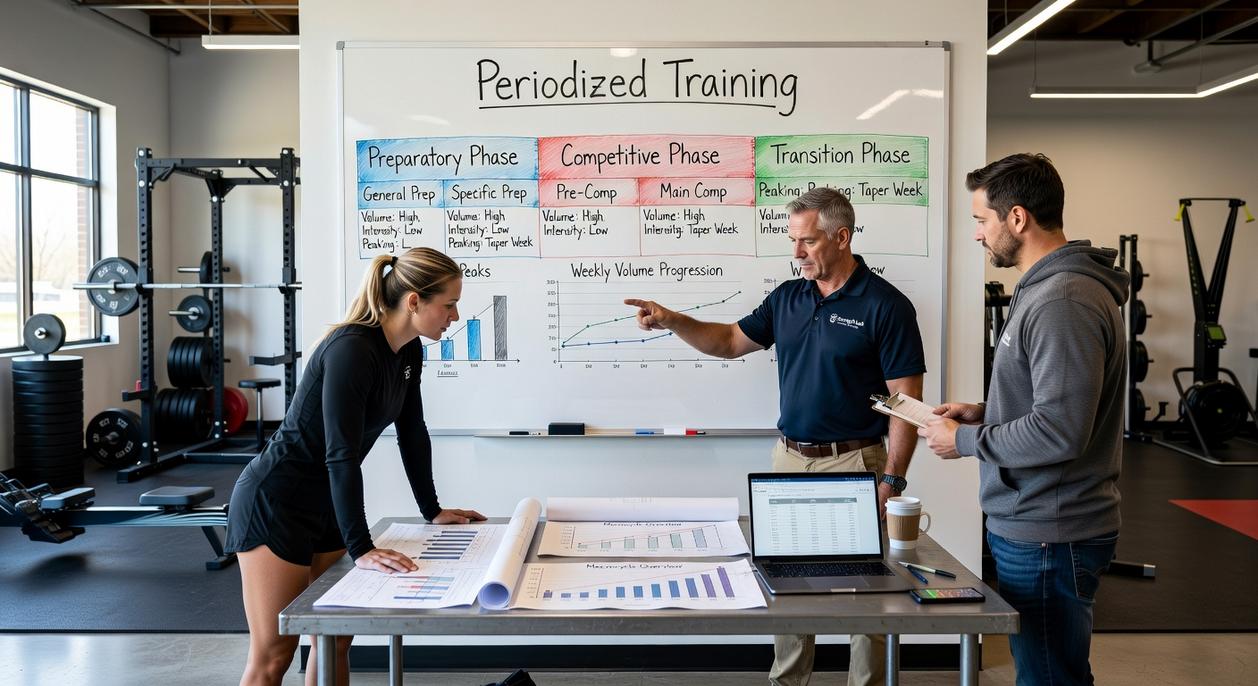
If you’ve ever wondered why elite athletes don’t train at full throttle year-round, the answer is simple: smart progression beats constant intensity. This structured approach is often called a macrocycle (a long-term training plan typically spanning a season or year). A well-designed periodization training guide maps that macrocycle into four essential phases.
Phase 1: Preparatory / Base-Building
First comes high volume and low-to-moderate intensity. “Volume” refers to total workload—sets, reps, distance, or time. The goal? Build muscle endurance, aerobic capacity, and technical consistency. Think of it like laying the concrete before building a skyscraper.
Some athletes argue this phase feels slow or unnecessary. They’d rather jump straight into explosive drills. However, research shows foundational strength reduces injury risk and improves long-term performance (ACSM, 2022). Skipping this stage is like fast-forwarding through the tutorial and wondering why you keep losing later.
Phase 2: Pre-Competition / Intensification
Next, volume drops while intensity climbs. “Intensity” means how hard the effort is relative to your maximum. This is where strength converts into speed and power—sprinting, Olympic lifts, position-specific drills.
If you’re asking what’s next after building strength, this is it: apply force faster. Pro tip: track bar speed or sprint times to confirm your power is actually improving (not just feeling harder).
Phase 3: Competition / Peaking
Here, training becomes highly specific. Volume is low, intensity is very high. The aim is peak performance—timing your best output for key games. Maintenance replaces development. Studies on tapering show performance can improve 2–3% when fatigue is strategically reduced (Mujika & Padilla, 2003).
Phase 4: Transition / Active Recovery
Finally, very low intensity and alternative activities restore the body and mind. Some athletes resist this phase, fearing lost progress. In reality, recovery prevents burnout and overtraining (NIH, 2021).
If you’re wondering how strength translates to game impact, explore how strength and conditioning programs improve game performance. The next step isn’t training harder—it’s training smarter.
From Theory to Practice: A Sample Annual Training Plan
Have you ever wondered why some athletes seem to peak at exactly the right moment—while others burn out before playoffs even start? The difference is rarely talent. It’s planning.
This sample periodization training guide follows a basketball athlete whose season runs October through April, with one clear macrocycle goal: peak performance for April playoffs.
Breaking the Year Into Winning Phases
Mesocycle 1 (May–July): Preparatory Phase
This is the foundation. High-volume strength training builds raw force production, while steady cardiovascular work develops an aerobic base (think long runs, tempo intervals, and controlled lifting progressions). It’s not flashy—but neither is building a skyscraper without concrete.
Mesocycle 2 (August–September): Pre-Competition Phase
Now we convert strength into power. Olympic-style lifts, plyometrics, and sharp agility drills dominate. Conditioning becomes sport-specific—suicides, defensive slides, transition sprints. This is a core athletic performance strategy. Why train like a powerlifter when you need to explode like Ja Morant?
- Prioritize movement speed over load
- Increase basketball-specific conditioning
- Track vertical jump and sprint times
Mesocycle 3 (October–March): Competition Phase
In-season work shifts to maintenance. Lower volume, high intent lifts. Recovery becomes king—sleep, mobility, nutrition. The perfect game day preparation tip? Reduce training load 48–72 hours before tip-off.
Mesocycle 4 (April): Peaking Phase
Volume tapers. Intensity stays sharp. Fresh legs win playoff series.
Mesocycle 5 (Late April–May): Transition Phase
Active recovery, cross-training, mental reset.
So ask yourself: Are you training hard—or training with purpose?
Train Smarter, Not Harder: Your Path to Consistent Gains
If you searched for a structured workout plan, this is your turning point. Aimless training feels productive (you’re sweating, after all), but without structure, plateaus, overuse injuries, and burnout are almost guaranteed. Research shows planned training variation improves performance and reduces injury risk (ACSM, 2022).
The fix? Periodization. Periodization is the strategic cycling of training intensity and volume over time to drive adaptation while managing fatigue. Think of it like seasons in a TV series—each phase builds toward the finale.
Here’s how to apply a periodization training guide today:
- Define your main goal. A race? A max lift? A season opener?
- Map a macrocycle (3–12 months). Work backward from competition day.
- Break it into phases:
- Foundation (build capacity)
- Strength/Power (increase intensity)
- Peak (reduce volume, sharpen performance)
- Schedule recovery weeks every 4–6 weeks.
Pro tip: Track performance markers weekly to adjust load early.
Structure creates momentum. Momentum creates results.
Take Control of Your Training Results
You came here looking for a smarter, more structured way to improve performance—and now you have it. By understanding how to apply a periodization training guide to your routine, you’re no longer guessing your way through workouts. You’re following a system designed to eliminate plateaus, prevent burnout, and maximize results when it matters most.
Too many athletes train hard but see inconsistent progress. That frustration—putting in the effort without seeing peak performance on game day—is exactly what structured periodization solves. With the right phases, recovery timing, and progression strategy, every workout builds toward a clear competitive edge.
Now it’s time to act. Don’t let another season slip by with scattered programming and stalled gains. Start implementing a proven periodization training guide today and train with purpose. Follow a system trusted by serious athletes who demand measurable results, apply the structure consistently, and watch your performance peak exactly when you need it most.