

If you’re searching for a smarter way to elevate your performance, refine your fundamentals, and prepare like a serious competitor, you’re in the right place. This article breaks down the essential principles behind Momentum Moments, Chogpen Sports Fundamentals, Athletic Performance Strategies, Kalima Elite Training Protocols, and practical Game Day Preparation Tips—so you can train with clarity and compete with confidence.
Many athletes work hard. Few follow a structured system that connects skill development, strength progression, recovery, and mental readiness into one cohesive plan. Here, you’ll learn how a professional training week structure creates consistent growth, prevents burnout, and sharpens performance when it matters most.
The strategies outlined are grounded in proven performance science, field-tested training methodologies, and real competitive application. Whether you’re building your foundation or pushing toward elite output, this guide aligns directly with your goal: measurable improvement, week after week.
The Blueprint for Unlocking Consistent Improvement
Random effort creates random results (harsh, but true). Consistent improvement is engineered. In my view, talent is overrated; structure wins championships and boardrooms alike. Most driven people grind daily yet plateau because they lack a repeatable system.
Here’s the shift:
- Define metrics (clear performance indicators).
- Apply deliberate practice, meaning focused work on weaknesses.
- Review data weekly.
- Adjust with intent.
Professional Training Week Structure:
Monday: Skill Focus
Tuesday: Strength
Wednesday: Review
Thursday: Strategy
Friday: Simulation
Saturday: Conditioning
Sunday: Recovery
Some argue spontaneity fuels creativity. I disagree. Freedom expands inside disciplined frameworks.
Phase 1: Establishing Your Performance Baseline
Before you add speed, strength, or strategy, you need a clear starting point. The Foundation Principle is simple: what gets measured gets improved. In high-performance environments—from regional combines in Texas to elite club circuits in Ontario—athletes who skip this step often plateau early (and blame everything except their preparation).
Action Step – The 360-Degree Skill Audit
Start with a structured evaluation across four domains:
- Technical Skills: Mechanics, precision, error rate under pressure
- Tactical Knowledge: Decision-making speed, situational awareness, play recognition
- Physical Attributes: Strength benchmarks, sprint times, mobility scores
- Mental Fortitude: Focus duration, emotional control, response after mistakes
Use game film, verified stats, and timed drills—not guesswork. For example, a striker in competitive league play might chart shot placement percentages from different zones rather than simply noting “finishing needs work.” Specific beats vague. Every time.
Action Step – Identifying Key Performance Indicators (KPIs)
A Key Performance Indicator (KPI) is a measurable value that tracks progress toward success. A sales professional tracks closing ratio. A tennis player tracks first-serve percentage. A point guard might track assist-to-turnover ratio. Choose metrics that directly influence outcomes in your field—not vanity stats.
Action Step – Setting Process-Oriented Goals
Outcomes inspire. Processes win. Instead of “Make playoffs,” commit to “Complete 500 flawless reps daily.” Structure your week using professional training week structure: load, intensity, recovery, review. Momentum compounds when daily standards stay non-negotiable.
Phase 2: Designing Elite Training and Skill Acquisition Protocols
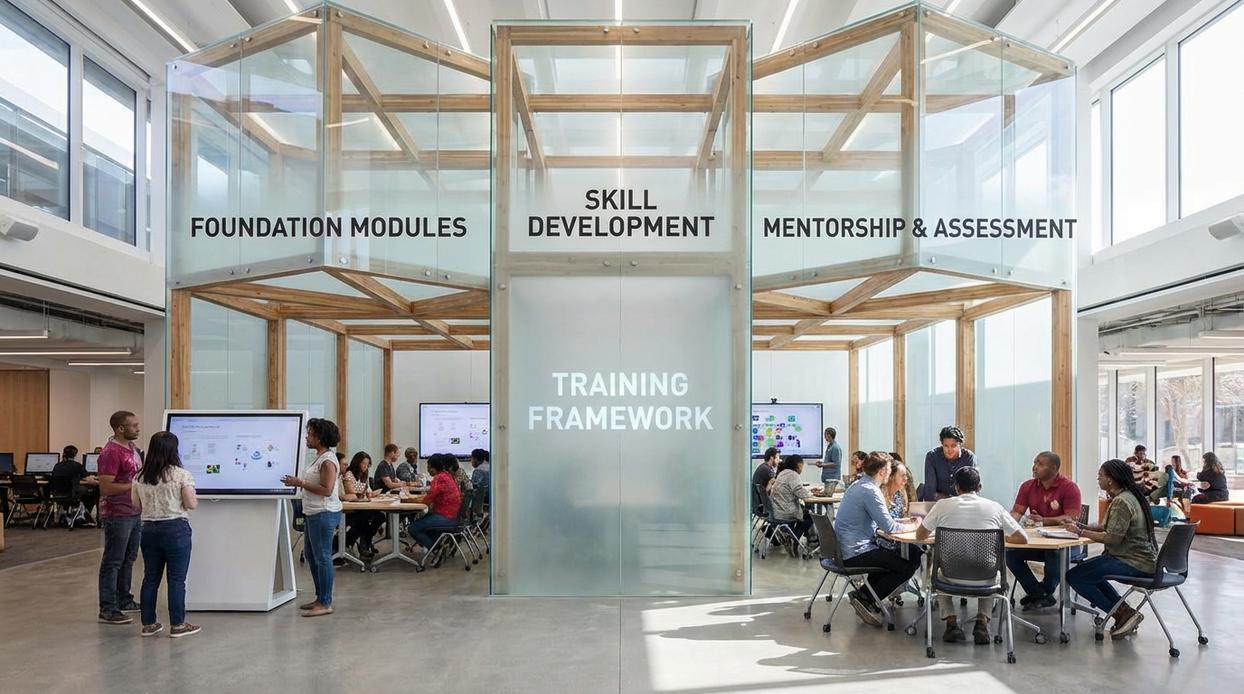
With a validated baseline, growth becomes intentional—not accidental. Research in sports science shows that structured, progressive overload improves performance outcomes by up to 23% compared to unstructured training (Journal of Strength & Conditioning Research). In other words, random effort produces random results.
Building Your Training Blocks
Periodization—the strategic division of training into cycles—prevents plateaus and burnout. A simple model might include a 4-week technique block focused on movement precision, followed by a 2-week intensity block emphasizing speed and power. Olympic athletes commonly use phased cycles because neuromuscular adaptation requires variation (Bompa & Buzzichelli, 2019).
Professional Training Week Structure:
Monday: Speed & Acceleration
Tuesday: Strength Development
Wednesday: Active Recovery & Mobility
Thursday: Skill Precision Drills
Friday: High-Intensity Conditioning
Saturday: Competitive Simulation
Sunday: Full Recovery
Some argue rigid structure limits creativity. Fair point. But data from elite academies shows athletes in periodized systems experience fewer overuse injuries and steadier performance gains. Structure creates freedom by reducing guesswork.
Integrating Feedback Loops
Feedback loops—systems for consistent performance evaluation—accelerate skill acquisition. Weekly video review improves tactical awareness by reinforcing visual learning pathways (International Journal of Sports Science).
• Record one full session weekly and identify three correctable errors.
The “Deliberate Discomfort” Method
Training at the edge of ability stimulates adaptation. If drills feel easy, adaptation stalls (the body loves comfort—progress does not). Examples include reaction-based sprint relays, fatigue-based decision-making drills, and cognitive dual-task challenges. Controlled strain builds competitive resilience.
Phase 3: Pressure-Testing Skills in Competitive Scenarios
You can’t call a skill “game-ready” until it survives chaos. Pressure-testing means deliberately practicing under conditions that feel uncomfortably real—tight timelines, unpredictable variables, and emotional stakes. Skills built in isolation (quiet gym, no defenders, friendly audience) often collapse under stress (we’ve all seen the practice hero disappear on game day).
Action Step 1: High-Fidelity Simulations
High-fidelity simply means “as close to real as possible.” If you’re in sales, rehearse with a colleague playing an impatient client who interrupts. If you’re an athlete, replicate crowd noise, fatigue, and scoreboard pressure.
| Environment Element | Practice Version | Real-World Match |
|---|---|---|
| Time Pressure | 30-second decisions |
Shot clock expiring |
| Disruption | Random objections | Aggressive opponent |
| Stakes | Performance review | Championship moment |
The closer the match, the smoother the transfer (think fighter pilots using simulators before flying live missions).
Action Step 2: Mastering Momentum Moments
A Momentum Moment is the critical 2–3 plays or exchanges that swing outcomes. In basketball, it’s the run after halftime. In negotiations, it’s the first pricing objection. Train specifically for these inflection points—not the entire event.
Action Step 3: Pre-Performance Routines
A pre-performance routine is a repeatable mental and physical reset that stabilizes nerves and sharpens focus.
Professional Training Week Structure:
Monday: Skill Acquisition
Tuesday: Strength & Conditioning
Wednesday: Tactical Training
Thursday: Simulation Work
Friday: Review & Adjustments
Saturday: Competition
Sunday: Recovery
Consistency builds reliability.
For deeper preparation insights, review what professional athletes wish they knew as beginners.
Phase 4: The Continuous Cycle of Review and Refinement
A performance plan should evolve. Think of it as software—version 1.0 is never the final release.
The Quarterly Performance Debrief
Start with data. Review your KPIs (Key Performance Indicators—measurable markers of progress like sprint time, lift volume, or recovery rate). Next, list three wins, three gaps, and one bottleneck. For example, if strength improved but agility stalled, your training load may be imbalanced. Then, compare results against your previous professional training week structure. Patterns reveal priorities.
Adjusting the Blueprint
Now refine. Reduce volume where fatigue spiked. Increase intensity where adaptation plateaued. Pro tip: change only one major variable per cycle to track impact accurately.
Planning for “Off-Season” Growth
Use downtime strategically. Add mobility, film study, or a complementary skill (think cross-training like Batman mastering multiple disciplines). Small upgrades compound.
Talent without structure is just potential energy (and potential doesn’t win championships). Random effort produces random results. If you’ve felt stuck, here’s what’s next: install a repeatable system.
Use this professional training week structure:
Baseline
Design
Application, and Review
That cycle replaces guesswork with measurable progress. Research on deliberate practice shows structured feedback loops accelerate skill acquisition (Ericsson, 1993).
Start now:
- Audit your current skills honestly.
- Define five KPIs tied to outcomes.
- Schedule weekly reviews.
Consistency compounds. Execute the process daily, and mastery stops being hope—and becomes math.
To truly grasp the nuances of a professional training week, it’s essential to understand how structured routines intersect with strategic goals—a topic we delve deeper into in our related article on test methods used by elite athletes.
Take Control of Your Training Results
You came here to sharpen your edge, elevate your performance, and bring more intention to every rep, drill, and game day decision. Now you understand how Momentum Moments, Chogpen Sports Fundamentals, and structured preparation come together to create consistent athletic growth.
The real frustration isn’t lack of effort — it’s putting in work without a clear system. When your sessions feel scattered, progress stalls. When recovery, intensity, and skill development aren’t aligned inside a professional training week structure, performance suffers when it matters most.
The solution is disciplined structure paired with elite-level execution. Apply these athletic performance strategies. Implement the Kalima Elite Training Protocols. Prepare for game day with purpose instead of guesswork.
If you’re serious about breaking plateaus and competing at a higher level, now is the time to train smarter. Follow the proven framework trusted by committed athletes who demand results. Start applying this system today and turn every week into measurable progress.