
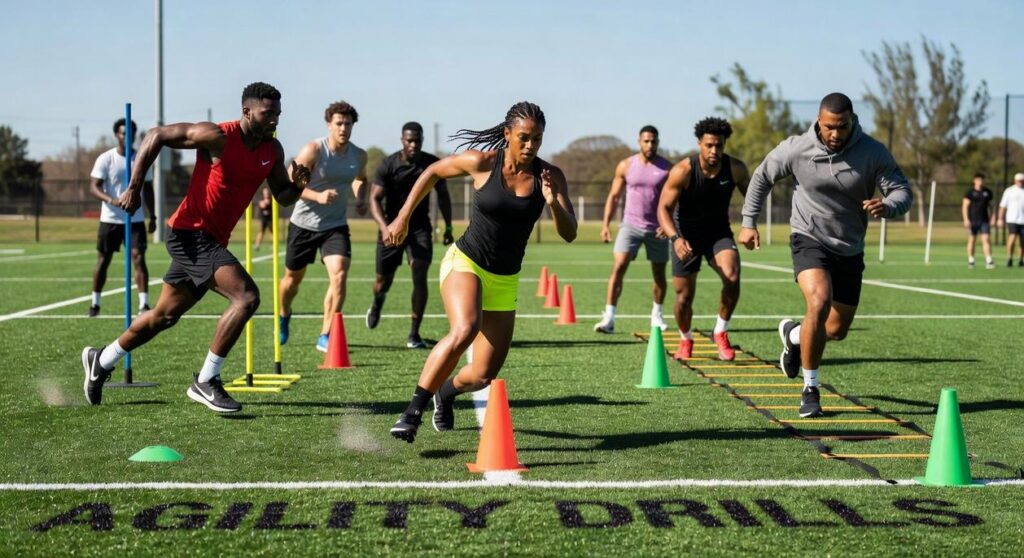
If you’re searching for ways to gain a competitive edge on the field or court, it starts from the ground up. Speed, balance, reaction time, and control all depend on one foundational skill: athletic footwork training. Whether you’re an aspiring athlete or a seasoned competitor, refining your movement mechanics can be the difference between reacting late and dominating the moment.
This article breaks down proven footwork principles, performance-focused drills, and game-day application strategies designed to elevate agility and coordination. We draw from performance-tested training methodologies, sports science fundamentals, and real-world competitive insights to ensure every recommendation is practical and results-driven.
By the end, you’ll understand how to move more efficiently, cut sharper, accelerate faster, and maintain control under pressure. If your goal is measurable improvement in athletic performance, you’re in the right place.
Have you ever wondered why you’re strong in the gym but a step slow on game day? Sound familiar? Often, the real limiter isn’t power—it’s precision. Inefficient movement wastes energy and steals split seconds. So, what changes that?
First, understand the pillars:
- Agility—your ability to decelerate, change direction, and reaccelerate under control.
- Coordination—the timing between brain and body that makes movement fluid.
Through structured athletic footwork training, you’ll attack Momentum Moments instead of hesitating. Meanwhile, progressive drills sharpen reaction time and spatial awareness. The result? Faster cuts, cleaner transitions, and explosive confidence when it matters most. Every time.
The Core Principles of Elite Movement
Elite movement isn’t magic—it’s mechanics. And when you understand the mechanics, you unlock speed, control, and confidence under pressure (yes, even in the final seconds of a tight game).
Agility vs. Coordination
Agility is your ability to change direction rapidly. Coordination is the neuromuscular control—how your brain and muscles communicate—to do it efficiently. Think of agility as the horsepower and coordination as the steering wheel. You need both. When they work together, cuts become sharper, transitions smoother, and wasted motion disappears. The benefit? Faster reactions without burning extra energy.
The Center of Gravity Rule
Your center of gravity is your body’s balance point. Keep it low in an athletic stance—knees bent, hips loaded—and you create stability. Low wins. A lower base means quicker first steps and fewer slips, especially during athletic footwork training.
Force Absorption & Redirection
Loading is pre-stretching muscles to store elastic energy (like a coiled spring). Absorb force when landing, then redirect it explosively. This reduces injury risk and boosts power output in the same motion.
Head & Eye Discipline
Your feet follow your eyes. Lock your gaze where you intend to move, and your body aligns naturally. Master this, and hesitation fades—replaced by decisive, game-ready movement.
The Essential Drills: Building Your Agility Toolkit
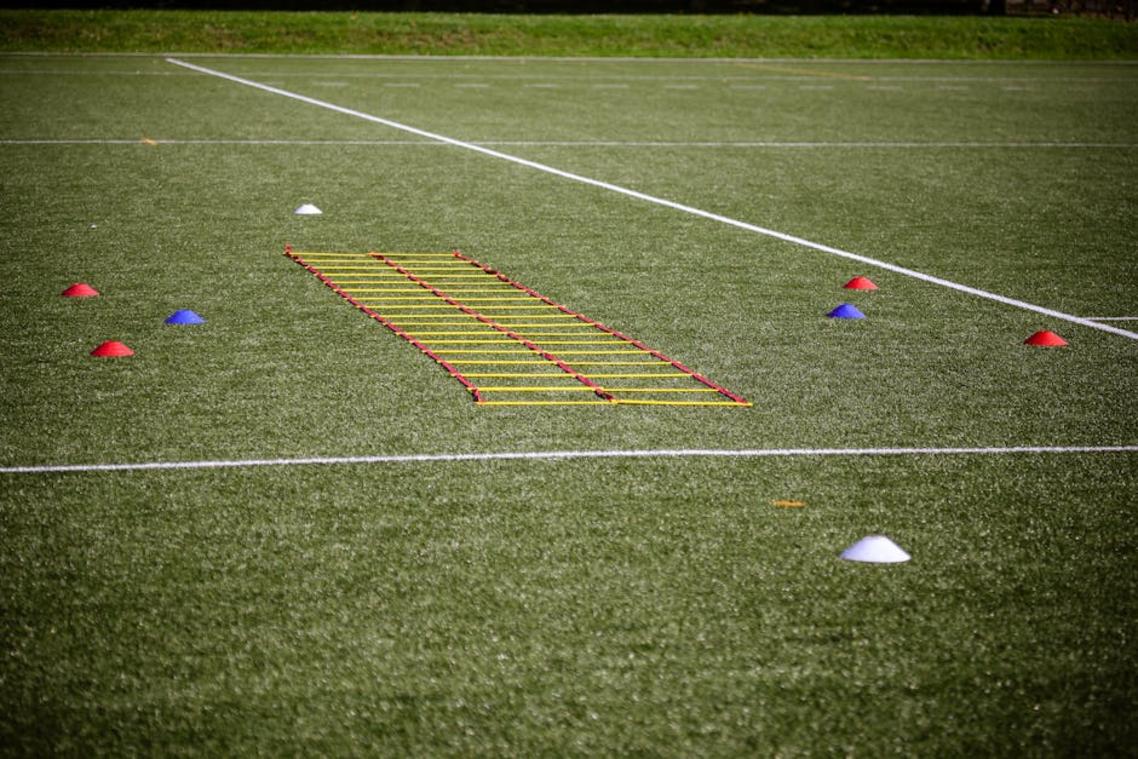
I still remember the first time I ran an agility ladder. I thought I was fast—until my feet tangled like headphone wires in a pocket. That humbling session taught me that speed isn’t just power; it’s precision.
Agility Ladder Drills
Start with the Ickey Shuffle: step in with one foot, bring the second foot in, then move the first foot out laterally. It builds rhythm—your body’s internal timing system—and reduces ground contact time (how long your foot stays on the floor). The Two-In-Two-Out pattern sharpens foot speed by forcing quick, symmetrical steps in and out of each square. I cue athletes to stay on the balls of their feet (heels kissing the ground only briefly). The goal is quiet, efficient movement—like you’re sneaking past a sleeping defender.
Cone Drills for Change of Direction
Set up the T-Drill with four cones in a T shape. Sprint forward, shuffle laterally, shuffle across, shuffle back, then backpedal to start. Focus on hip rotation—the turning of your hips to align with your new direction—and explosive push-offs. The 4-Cone Box Drill forms a square; sprint, shuffle, backpedal, shuffle. I learned the hard way that sloppy hips cost seconds. Clean turns win plays.
Plyometric Foundations
Box Jumps and Skater Hops build elastic strength—your muscles’ ability to store and release energy quickly (think of a compressed spring). This translates to sharper cuts and faster first steps. Land softly, explode instantly. That’s the rule.
Reactive Drills
Try “Point and Go.” A partner points; you react and sprint. No guessing. Just response. This sharpens the mind-body connection, critical in athletic footwork training. Pro tip: keep reactions under three seconds to mimic real game speed.
Some argue drills don’t replicate chaos. They’re right—partially. But drills create the foundation. Chaos tests it.
The 4-Week Footwork Transformation Protocol
After four weeks of structured progression, most athletes notice sharper cuts, cleaner transitions, and faster first steps. The key? A focused 3-day-per-week schedule performed before main strength training. This timing maximizes neural adaptation—the nervous system’s ability to coordinate faster, more precise movement patterns (think upgrading your body’s internal software before adding horsepower).
Week 1 – Foundation & Patterning
Days 1, 3, and 5 focus on ladder drills and basic cone patterns at 50–70% speed. The goal is technical mastery, not exhaustion. Every step should feel deliberate. Sloppy reps now create sloppy habits later. This phase reinforces why balance and body control are core sports fundamentals. Slow is smooth; smooth becomes fast.
Week 2 – Introducing Intensity
Speed climbs to 80–90%. Box jumps and low-level plyometrics enter the mix to build explosive force production (your ability to generate maximum power quickly). Some argue athletes should jump straight to max effort—but skipping progression often leads to plateaus or nagging injuries. Controlled intensity wins long term.
Week 3 – Adding Reaction
Now the brain gets challenged. Reactive drills replace predictable patterns. Athletes respond to visual or verbal cues, simulating real-game chaos. This is where athletic footwork training separates practice speed from game speed. Reaction time tightens; wasted motion shrinks.
Week 4 – Peak Performance
All elements combine at 100% intensity. Movements are crisp, violent, and efficient. Think playoff tempo. By week’s end, footwork isn’t something you think about—it’s automatic (and that’s when performance really unlocks).
Game Day Activation Plan
| Drill | Time |
| Ladder (In-In-Out-Out) | 2 min |
| Cone Shuffle | 3 min |
Start with crisp ladder steps to spark athletic footwork training and wake your nervous system. Transition to low, reactive cone shuffles (stay light). Move sharp, not tired. Pro tip: stop before fatigue. Keep intensity controlled always.
From Drills to Dominance
Uncoordinated footwork is the hidden brake on your speed, power, and confidence. Every late cut or crossed step leaks points. Our structured four-week protocol uses timed ladder sequences, reactive cone grids, and balance resets to forge neuromuscular pathways that automate precision. This athletic footwork training system layers progression, intensity targets, and measurable benchmarks so gains translate into sharper first steps and controlled deceleration. Some argue scrimmage alone builds agility. But random reps rarely create repeatable dominance. Commit daily, track times, refine angles, and watch movements become instinctive (like flipping a switch in the fourth quarter). Today.
Take Control of Your Game Day Edge
You came here looking for a smarter way to sharpen your performance and separate yourself from the competition. Now you understand how Momentum Moments, Chogpen Sports Fundamentals, and structured preparation work together to elevate every aspect of your play.
The reality is this: inconsistent movement, slow reactions, and wasted energy are what hold most athletes back. When your foundation is off, your confidence drops and your performance follows. Mastering athletic footwork training and applying proven performance strategies eliminates those weak links and gives you the explosive edge you’ve been chasing.
Now it’s time to act. Commit to implementing these training principles into your weekly routine. Refine your movement patterns. Dial in your preparation. Track your progress.
If you’re serious about unlocking elite-level consistency, don’t leave your development to chance. Follow the proven protocols trusted by high-performing athletes and start training with purpose today. Your next breakthrough performance begins with the work you choose to do now.
 Annie Crumponts has opinions about athletic performance strategies. Informed ones, backed by real experience — but opinions nonetheless, and they doesn't try to disguise them as neutral observation. They thinks a lot of what gets written about Athletic Performance Strategies, Chogpen Sports Fundamentals, Game Day Preparation Tips is either too cautious to be useful or too confident to be credible, and they's work tends to sit deliberately in the space between those two failure modes.
Reading Annie's pieces, you get the sense of someone who has thought about this stuff seriously and arrived at actual conclusions — not just collected a range of perspectives and declined to pick one. That can be uncomfortable when they lands on something you disagree with. It's also why the writing is worth engaging with. Annie isn't interested in telling people what they want to hear. They is interested in telling them what they actually thinks, with enough reasoning behind it that you can push back if you want to. That kind of intellectual honesty is rarer than it should be.
What Annie is best at is the moment when a familiar topic reveals something unexpected — when the conventional wisdom turns out to be slightly off, or when a small shift in framing changes everything. They finds those moments consistently, which is why they's work tends to generate real discussion rather than just passive agreement.
Annie Crumponts has opinions about athletic performance strategies. Informed ones, backed by real experience — but opinions nonetheless, and they doesn't try to disguise them as neutral observation. They thinks a lot of what gets written about Athletic Performance Strategies, Chogpen Sports Fundamentals, Game Day Preparation Tips is either too cautious to be useful or too confident to be credible, and they's work tends to sit deliberately in the space between those two failure modes.
Reading Annie's pieces, you get the sense of someone who has thought about this stuff seriously and arrived at actual conclusions — not just collected a range of perspectives and declined to pick one. That can be uncomfortable when they lands on something you disagree with. It's also why the writing is worth engaging with. Annie isn't interested in telling people what they want to hear. They is interested in telling them what they actually thinks, with enough reasoning behind it that you can push back if you want to. That kind of intellectual honesty is rarer than it should be.
What Annie is best at is the moment when a familiar topic reveals something unexpected — when the conventional wisdom turns out to be slightly off, or when a small shift in framing changes everything. They finds those moments consistently, which is why they's work tends to generate real discussion rather than just passive agreement.