

Pushing your limits in training is only half the equation—what you do after the workout determines how far and how fast you progress. This guide delivers a systematic blueprint for accelerating recovery after intense sessions, moving beyond generic cooldown advice to implement elite-level athletic recovery strategies that reduce muscle soreness, restore energy, and help prevent injury. Designed for serious athletes and committed competitors, it breaks down science-backed protocols used at the highest levels of sport. If your goal is to maintain performance momentum and train at your peak consistently, this is your actionable roadmap to smarter, faster recovery.
Mastering the Core Fundamentals of Post-Exercise Repair
Incorporating effective recovery strategies not only enhances athletic performance but also aligns with the principles of integrity and fairness in competition, as discussed in our article on what it means to be anti-cheat in the gaming world – for more details, check out our What Does It Mean To Be Anti Cheat Hmcdgaming.
Have you ever wondered why some workouts leave you stronger the next day, while others leave you stiff and drained? The difference often comes down to what you do immediately after training.
The Critical Recovery Window
The first 30–60 minutes post-exercise—often called the critical recovery window—is when your body is primed for repair. During this time, muscle fibers (the tiny strands that contract to create movement) begin rebuilding, and glycogen (stored carbohydrate used for energy) needs replenishing. Miss this window, and you may delay recovery. So ask yourself: are you refueling and rehydrating right away, or scrolling on your phone instead?
Active Recovery vs. Passive Rest
Next, consider how you cool down. Active recovery—low-intensity movement after intense effort—helps circulate blood and clear metabolic byproducts like lactate. For example:
- 10 minutes of light cycling after leg day
- A brisk walk following sprint intervals
- Gentle stretching after upper-body lifting
In contrast, passive rest (complete stillness) has its place, but can increase stiffness. Ever finish a tough session and feel tighter once you sit down? That’s why movement matters.
Mobility and Flexibility Work
Transitioning into mobility work, focus on both dynamic stretches (controlled movement-based stretches) and static stretches (holding a position 20–30 seconds). Target major muscle groups used in your session—hamstrings, quads, chest, and shoulders. This simple routine supports long-term joint health (and yes, future PRs).
The Power of Cold and Heat Therapy
Finally, when should you use cold versus heat? Ice baths help reduce acute inflammation after intense competition. Heat packs, on the other hand, promote blood flow and muscle relaxation before mobility sessions. Pro tip: match the tool to the goal.
Consistent athletic recovery strategies turn hard workouts into measurable progress.
Fueling the Machine: Precision Nutrition for Rapid Rebuilding
Training breaks muscle down. Recovery builds it back stronger. The difference often comes down to timing and composition.
Macronutrient Timing for Recovery
Post-workout, aim for a 3:1 or 4:1 carbohydrate-to-protein ratio. Carbs replenish glycogen (stored energy in muscle), while protein triggers muscle protein synthesis—the repair process that builds new tissue (JISSN, 2017).
Option A: 60g carbs + 20g protein (3:1) — ideal after strength sessions.
Option B: 80g carbs + 20g protein (4:1) — better after high-intensity conditioning.
Some argue total daily intake matters more than timing. True—but immediate refueling accelerates adaptation when sessions are frequent (ACSM, 2016).
Hydration as a Recovery Tool
Water vs. electrolytes?
- Water only: Rehydrates short sessions.
- Electrolytes (sodium, potassium, magnesium): Restore fluid balance, prevent cramps, support nerve signaling.
If sweat leaves salt streaks on your shirt (a classic badge of effort), you need more than water.
Key Micronutrients and Supplements
- Creatine: Replenishes ATP, boosting power output (ISSN, 2017).
- Tart cherry juice: Reduces inflammation and soreness (Nutrients, 2019).
- Omega-3s: Support joint integrity.
Example Recovery Meals
- Banana + whey + oats shake
- Greek yogurt, berries, honey, granola
- Rice, grilled chicken, roasted vegetables
These athletic recovery strategies turn effort into progress.
Elite Protocols: Advanced Techniques to Accelerate Recovery
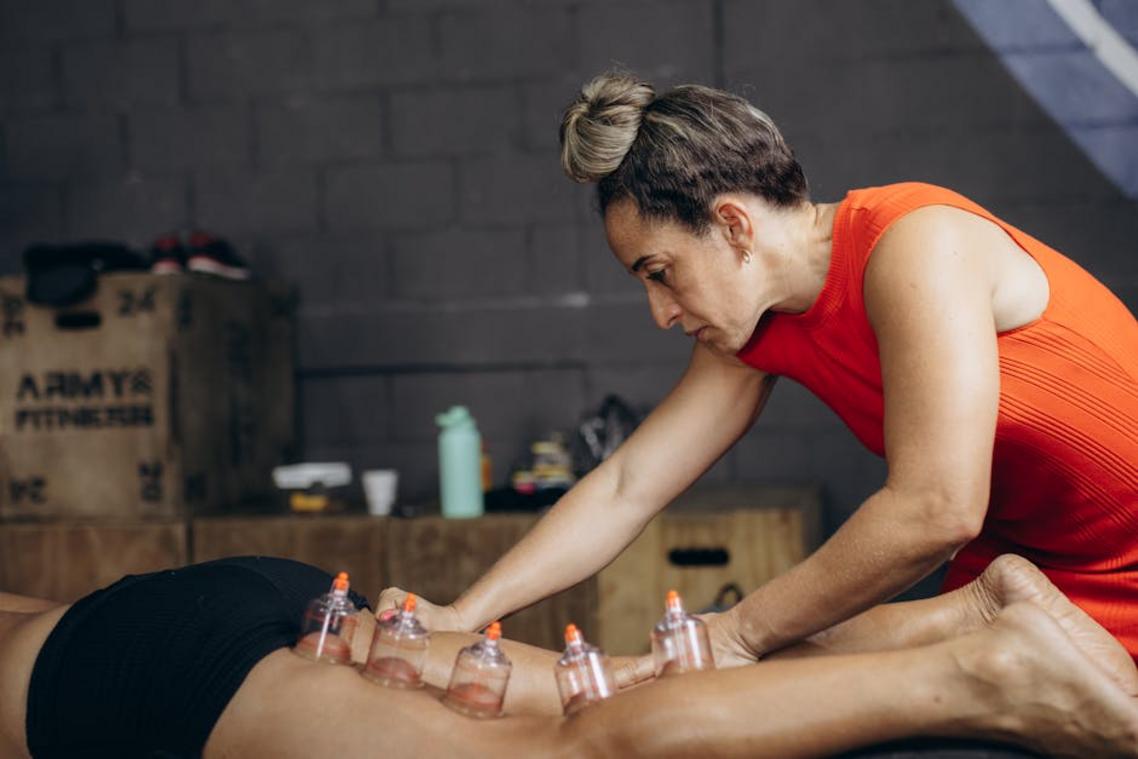
When performance matters, recovery becomes a competitive edge. Elite athletes don’t guess—they compare tools side‑by‑side and choose what fits the moment.
Compression vs. Percussive Therapy: Circulation or Precision?
Compression therapy (garments or pneumatic boots) applies graduated pressure to limbs, meaning tighter at the extremities and looser near the heart. This assists venous return—blood flowing back to the heart—and helps reduce DOMS (delayed onset muscle soreness). A 2015 meta‑analysis in Sports Medicine found compression garments can moderately reduce post‑exercise soreness.
By contrast, percussive therapy (massage guns) delivers rapid, targeted pulses into muscle bellies to stimulate blood flow and decrease perceived tightness. Best practice: stay on thick muscle tissue, avoid bony landmarks and joints, use lower speeds for warm‑ups and moderate speeds for recovery. Think sniper rifle vs. rain shower—precision versus broad coverage.
Some argue compression is passive and overrated. Fair. But if you’re managing full‑body fatigue after tournament play, boots outperform a handheld device in efficiency.
Foam Rolling vs. Lacrosse Ball: Broad Sweep or Deep Release?
Myofascial release targets fascia—the connective tissue surrounding muscles. Foam rollers cover larger areas (quads, lats), improving tissue mobility and range of motion. Lacrosse balls dig deeper into knots (glutes, traps). One increases overall pliability; the other attacks stubborn trigger points (yes, the ones that make you wince).
Pro tip: Roll slowly—about one inch per second—for meaningful tissue change.
Adaptogens and Systemic Recovery
Supplements like Ashwagandha, an adaptogen that helps regulate cortisol (the stress hormone), may support systemic recovery. Research in Journal of the International Society of Sports Nutrition suggests it can reduce stress and improve recovery markers.
Skeptics say supplements are unnecessary. Often true. But paired with smart sleep, hydration, and nutrition timing for peak athletic performance, they can complement structured athletic recovery strategies.
Choose tools based on context: full‑body fatigue, go compression. Local tightness, go percussive or targeted release. Recovery isn’t random—it’s strategic.
Ultimate Recovery Tool: Optimizing Sleep and Rest
Peak performance is built at night. During deep sleep—slow-wave sleep—your body releases human growth hormone (HGH), a key driver of muscle repair and tissue regeneration (think overnight construction crew). REM sleep, meanwhile, sharpens neural pathways and decision-making. Some argue training volume matters more than sleep. Yet research shows sleep restriction lowers testosterone and increases injury risk (Walker, 2017).
To maximize recovery, build a 30-minute wind-down routine, keep room cool (60–67°F), dark, and quiet, and cut caffeine six hours before bed. Add a 20–30 minute nap to reinforce athletic recovery strategies without harming nighttime cycles.
Integrating Recovery into Your Game Day Preparation
You set out to strengthen your game day preparation, and now you have a clear, layered plan to make recovery your competitive edge. The real obstacle isn’t how hard you train—it’s whether your body can rebuild, adapt, and come back stronger. Ignoring that process is what stalls progress and invites burnout.
By consistently applying these nutrition, therapy, and rest-based athletic recovery strategies, you turn effort into measurable performance gains. Don’t wait for fatigue or injury to force a change. Start today—implement one new recovery habit from each area and build a routine that protects your performance and elevates every game you play.
 Annie Crumponts has opinions about athletic performance strategies. Informed ones, backed by real experience — but opinions nonetheless, and they doesn't try to disguise them as neutral observation. They thinks a lot of what gets written about Athletic Performance Strategies, Chogpen Sports Fundamentals, Game Day Preparation Tips is either too cautious to be useful or too confident to be credible, and they's work tends to sit deliberately in the space between those two failure modes.
Reading Annie's pieces, you get the sense of someone who has thought about this stuff seriously and arrived at actual conclusions — not just collected a range of perspectives and declined to pick one. That can be uncomfortable when they lands on something you disagree with. It's also why the writing is worth engaging with. Annie isn't interested in telling people what they want to hear. They is interested in telling them what they actually thinks, with enough reasoning behind it that you can push back if you want to. That kind of intellectual honesty is rarer than it should be.
What Annie is best at is the moment when a familiar topic reveals something unexpected — when the conventional wisdom turns out to be slightly off, or when a small shift in framing changes everything. They finds those moments consistently, which is why they's work tends to generate real discussion rather than just passive agreement.
Annie Crumponts has opinions about athletic performance strategies. Informed ones, backed by real experience — but opinions nonetheless, and they doesn't try to disguise them as neutral observation. They thinks a lot of what gets written about Athletic Performance Strategies, Chogpen Sports Fundamentals, Game Day Preparation Tips is either too cautious to be useful or too confident to be credible, and they's work tends to sit deliberately in the space between those two failure modes.
Reading Annie's pieces, you get the sense of someone who has thought about this stuff seriously and arrived at actual conclusions — not just collected a range of perspectives and declined to pick one. That can be uncomfortable when they lands on something you disagree with. It's also why the writing is worth engaging with. Annie isn't interested in telling people what they want to hear. They is interested in telling them what they actually thinks, with enough reasoning behind it that you can push back if you want to. That kind of intellectual honesty is rarer than it should be.
What Annie is best at is the moment when a familiar topic reveals something unexpected — when the conventional wisdom turns out to be slightly off, or when a small shift in framing changes everything. They finds those moments consistently, which is why they's work tends to generate real discussion rather than just passive agreement.